





Attendee Identification Wristbands: Why Events Use Them Beyond Just Entry
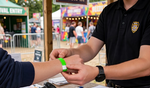
Most event organizers start using wristbands to solve an entry problem: confirming who paid and who did not. Once the bands are on wrists, organizers realize identification wristbands solve a longer list of problems than the ticket line. Staff need to be distinguishable from guests at a distance. Vendors need zone access that general admission does not grant. Parents need a system that reunites them with a separated child faster than a PA announcement. An ID wristband handles all of these when the color, closure, and marking are matched to the job.
What an Identification Wristband Actually Verifies
A wristband worn at an event carries more information than a ticket stub. The ticket confirms purchase. The wristband confirms identity, access level, and group membership in a format that stays visible and tamper-evident for the full duration of the event.
Paid Admission vs. Credential Verification
Gate entry is binary: paid or unpaid. Credential verification is layered. A music festival with general admission, VIP, backstage, and artist compound zones needs a system that communicates each level at a glance. A single wristband color per access tier lets security staff make that determination from ten feet away without stopping the flow of foot traffic.
Continuous Verification Throughout the Event
Paper tickets and hand stamps verify identity once, at the gate. A wristband verifies identity continuously, at every checkpoint, bar, restricted zone, and re-entry lane. The security identification guide covers how security teams use color-coded bands to spot unauthorized guests in real time without requiring each person to produce a ticket.
Separating Staff, Vendors, and General Admission at a Glance
Large events put staff, vendors, media, sponsors, and general admission into the same physical space. Without a visible sorting system, security defaults to checking credentials at every interaction, which slows operations and frustrates both staff and attendees.
Role-Based Color Coding
Assigning a distinct wristband color to each role category creates an instant visual hierarchy:
- Red for event staff and crew with full-access clearance
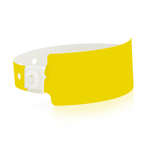
- Yellow for vendors and food-service workers with loading-dock and booth access
- Blue for general admission with front-of-house access only
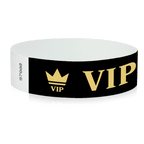
- Black for VIP and sponsor guests with lounge and backstage access
The specific colors matter less than the contrast between them. Neon and glow-in-the-dark options improve visibility at evening and nighttime events where standard colors are harder to read under stage lighting.
Reducing Credential Checks at Internal Checkpoints
When every person in a vendor apron wears the same color band, a stage manager glancing at a wrist can confirm authorization without pulling the person aside. The color replaces the conversation, which matters most during peak hours when security staff are managing hundreds of transitions per hour.
Using ID Wristbands for Lost-Child and Emergency Protocols
Family events, fairs, and theme parks face a scenario that general admission wristbands alone do not address: separated children. A child without visible identification becomes a PA announcement and a scramble. A child wearing a wristband with a parent's phone number or group code becomes a quick reunion.
Write-On and Custom-Printed Contact Bands
Tyvek® wristbands with a write-on panel allow parents or registration staff to add contact information at check-in. Common data on a child's identification band includes:
- Guardian's name and mobile phone number
- A pre-printed event hotline or help-desk location
- A group code matching the family's check-in record
- A QR code linking to the child's registration entry
Custom-printed bands with pre-filled event contact details eliminate the handwriting step entirely, which speeds registration lines at large family events.
Emergency Evacuation and Medical Identification
Color-coded bands also support emergency protocols. A venue assigning wristband colors by seating section or entry gate can direct evacuations by color, routing each group to the nearest exit. Medical-alert bands in a designated color signal first responders to check for health information printed or written on the band, such as allergies, medications, or emergency contacts.
Adding Names, Numbers, or QR Codes to an ID Wristband
Stock wristbands in solid colors handle basic identification. Adding printed data turns the band into a credential that carries specific, verifiable information.
Sequential Numbering and Duplicate Numbers
Numbered bands create an auditable record of every wristband issued. Sequential numbering tracks distribution volume, while duplicate-number bands pair a wrist copy with a stub that stays at the registration desk. The stub cross-references the wearer if a question arises later, which is common at ticketed events requiring proof of purchase for refunds or upgrades.
QR Codes and Barcodes
Printing a QR code or barcode on a wristband connects the physical band to a digital record. Scanning the code at a checkpoint pulls up the attendee's name, access level, purchase history, or medical notes without manual lookup. Venues running cashless payment systems tie the QR to a prepaid account, combining identification and purchasing into a single wristband scan.
Custom Text and Logos
Event branding on the band turns identification into marketing. A festival logo with the year printed alongside the attendee's access tier creates a keepsake that doubles as a functional credential. Identification wristbands with printed text, logos, and numbering are available across all material types.
Choosing a Material for All-Day Identification Wear
The right material depends on how many days the event runs, whether the band needs to survive water exposure, and whether tamper-evident security is a requirement.
Single-Day Events
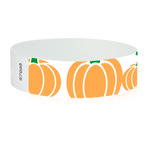
Tyvek wristbands are the standard for single-day identification. The adhesive closure is tamper-evident, the material resists tearing, and the cost starts as low as $0.02 per band. Write-on panels and pre-printed numbering options make Tyvek the most flexible choice for events lasting one to two days. The tamper-proof wristband guide explains how adhesive and snap closures prevent band transfer between attendees.
Multi-Day Festivals and Conferences
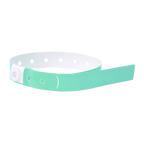
Plastic and vinyl wristbands use one-time locking snaps that hold up for three to ten days of continuous wear. Plastic is waterproof and starts at $0.09 per band, covering weekend festivals and three-day conferences. Vinyl handles longer stays of seven to ten days and supports tear-off tabs for drink tickets, meal vouchers, or daily activity tracking.
Ongoing Programs and Reusable Identification
Silicone wristbands are rated for indefinite daily wear and work best for ongoing identification programs rather than single-event access control. Membership groups, fitness programs, and seasonal staff use silicone bands as reusable ID that does not need replacing after each event. The bands are 100% latex-free and available in youth sizes for camps and school programs.
Shop Identification Wristbands
Identification wristbands do more than confirm entry. Matched to the right color, closure, and printed data, a single band sorts staff from guests, supports emergency protocols, and verifies credentials at every checkpoint throughout the event. Wristband Express carries identification wristbands in Tyvek, plastic, vinyl, silicone, and cloth with stock and custom options, no minimum spend, and same-day shipping on stock orders placed before 3 PM CST. Browse the identification collection or call 888.256.0816 to match materials and quantities to your event.
Frequently Asked Questions
What Are Attendee Identification Wristbands Used For?
Identification wristbands verify access level, role, and group membership throughout an event. Beyond gate entry, they separate staff from guests, support lost-child protocols, and carry printed data such as names, numbers, or QR codes.
How Do ID Wristbands Improve Event Security?
Color-coded wristbands let security staff verify credentials at a glance without stopping foot traffic. Tamper-evident closures prevent band transfer, and printed serial numbers or QR codes create an auditable record of every band issued.
Which Wristband Material Lasts the Longest at an Event?
Tyvek handles one to two days. Plastic covers three to seven days. Vinyl lasts seven to ten days. Silicone is rated for indefinite wear but is reusable and not tamper-evident, making silicone suited to ongoing programs rather than single-event access control.
Can You Write on an ID Wristband?
Yes. Tyvek wristbands with write-on panels accept pen or marker, which is common at family events where staff write a guardian's phone number on a child's band at check-in.
Do Identification Wristbands Come With Numbers or QR Codes?
Yes. Sequential numbering, duplicate-number stubs, QR codes, and barcodes are available as stock or custom options across Tyvek, plastic, and vinyl materials.
What Is the Cheapest Identification Wristband for Large Events?
Tyvek wristbands start as low as $0.02 per band and include tamper-evident adhesive closures, making them the lowest-cost option for single-day events requiring high-volume identification.
Share