

How Schools Use Wristbands on Field Trips to Track and Identify Students
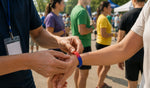
Field trips move students out of a controlled school environment and into public spaces where keeping track of every child becomes the primary concern. A zoo, museum, or amusement park mixes your students with hundreds of other visitors, making it easy to lose sight of who belongs to which group. Wristbands give teachers and chaperones a fast, visual way to identify their students, sort groups, and run accurate headcounts without stopping to check rosters. A glance at a color-coded band tells a chaperone instantly whether a child is in the right group, and printed contact information gives venue staff a way to reunite a separated student with the correct school. Here is how schools use wristbands at every stage of the trip.
Sorting Students Into Groups Before Departure
Organization starts before the bus leaves. Most field trips divide students into smaller groups assigned to specific chaperones, and wristbands make those assignments visible the moment a student steps off the bus.
Why Schools Color-Code Wristbands for Field Trip Groups
A student wearing a green band belongs to Mrs. Johnson's group. A student wearing a blue band belongs to Mr. Ramirez's group. That visual shorthand works at a distance, in a crowd, and without any verbal confirmation. Chaperones scan for their assigned color rather than memorizing a list of faces, which is especially helpful when supervising students they do not see every day.
A typical color-coding setup for a 100-student field trip might work like this:
| Group | Wristband Color | Chaperone | Students |
|---|---|---|---|
| Group 1 | Red | Mrs. Johnson | 25 |
| Group 2 | Blue | Mr. Ramirez | 25 |
| Group 3 | Green | Ms. Patel | 25 |
| Group 4 | Yellow | Mr. Lee | 25 |
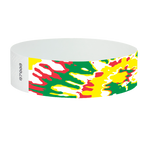
Tyvek wristbands are the standard for school field trips because they cost pennies per band, apply in seconds with a peel-and-press adhesive, and cannot be removed without tearing. That tamper-evident closure ensures a student cannot swap bands with a friend or quietly remove one during the trip.
Adding Student Names or Emergency Contact Information
Write-on Tyvek bands allow teachers or parents to add a student's name, teacher's cell phone number, or school name directly on the band with a marker. For younger students who may not be able to state their full name or school if separated, that written information becomes a critical safety layer. Any adult who finds a separated child can read the band and call the listed contact immediately.
Tracking Students in Public Places
Once a group arrives at a zoo, museum, amusement park, or park, students spread out. Wristbands turn every chaperone into a spotter who can scan a crowd for their group's color rather than counting individual heads.
How Field Trip Wristbands Help Identify Students in Public Places
Public venues mix school groups with other visitors, families, and sometimes multiple school groups from different districts. A wristband in a distinct color immediately separates your students from everyone else. Chaperones performing headcounts look for the assigned color, count the bands, and confirm the number matches their roster.
For field trips to large venues, wristbands also help venue staff assist if a student gets separated. A child wearing a bright orange band with a school name printed on it is far easier to reunite with the right group than a child with no visible identifier.
- Color-coded bands let chaperones spot their group members from across a room or field.
- Written or printed school names help venue staff return separated students to the correct group.
- Tamper-evident closures ensure bands stay on all day and cannot be swapped between students.
Buddy System Reinforcement
Some schools pair students as buddies and assign both buddies the same wristband color, adding a visual reminder that the two should stay together. If a chaperone spots one green band without the other nearby, they know immediately that a pair has separated.
Running Fast, Accurate Headcounts
Headcounts happen constantly on field trips: before boarding the bus, after arriving at the venue, before lunch, after restroom breaks, and before departure. Wristbands speed up every one of those counts.
Counting by Color Instead of by Name
Rather than calling out 25 names from a list, a chaperone counts 25 red wristbands. A missing color means a missing student, and the chaperone knows immediately rather than waiting to reach the end of a roll call. For transitions between areas within a venue, color-based counting is fast enough to do while the group is still moving.
Custom printed wristbands with sequential numbers add a second verification layer. A chaperone who counts 24 red bands instead of 25 can check the numbered list to identify exactly which student is missing, saving minutes of confusion.
- Color counting is faster than roll calls and works while groups are in motion.
- Numbered bands identify exactly who is missing when a count comes up short.
- Repeated counts at every transition point catch separations early.
Choosing the Right Band for School Field Trips
Single-day field trips need a band that is affordable in bulk, fast to apply, and secure enough that students cannot remove or trade them. Tyvek wristbands meet all three requirements. The adhesive closure is tamper-evident, the material is water-resistant, and the cost per band is the lowest of any wristband type.
For overnight trips or multi-day excursions, plastic wristbands with a one-time locking snap offer waterproof durability and a secure closure that lasts several days. Silicone wristbands work well as keepsake bands for end-of-year trips or special reward outings, though their stretch-fit design means they are not ideal for security purposes since students can remove and share them.
Keep Every Student Accounted For
Color-coded wristbands turn chaotic field trips into organized, trackable outings where every student is visually identifiable at a glance. Wristband Express carries Tyvek bands in dozens of colors for affordable group sorting and custom-printed options for adding school names, numbers, or emergency contacts, with same-day shipping on stock orders placed before 3 PM CST. Order your field trip bands or call 800.434.9124 for help choosing colors and quantities.
Frequently Asked Questions
1. How do schools use wristbands on field trips?
Schools use wristbands to sort students into chaperone groups, run fast headcounts by color, and provide a visible identifier in public places.
2. How do teachers use wristbands to track students off campus?
Teachers assign each group a wristband color and count bands instead of calling names, making headcounts faster and catching missing students earlier.
3. How do field trip wristbands help identify students in public places?
A color-coded band visually separates school students from other visitors, and printed school names help venue staff reunite separated children with the correct group.
4. Why do schools color-code wristbands for field trip groups?
Color coding lets chaperones identify their assigned students at a distance without memorizing faces or checking lists, which is critical in crowded public venues.
5. What information can be written on a field trip wristband?
Teachers can write or print student names, emergency contact phone numbers, school names, and group assignments directly on write-on Tyvek bands.
6. What wristband material is best for a school field trip?
Tyvek is the standard for single-day trips due to its low cost, fast application, and tamper-evident adhesive closure that students cannot remove without tearing.
Share