

What Do Wristband Colors Mean? A Complete Guide to Awareness and Event Color Codes
Wristband colors carry meaning in two very different contexts. In awareness campaigns, a color links to a specific cause, health condition, or social movement. At events, colors sort guests into access levels, age groups, or ticket tiers. Picking the wrong color can send an unintended message, such as using pink for general admission at a breast cancer fundraiser where pink already signals a specific supporter tier. Knowing what each color represents helps you choose the right one for your campaign or event without creating confusion at the gate or undermining your cause.
Awareness Wristband Colors and What Each One Represents
Colored awareness wristbands became mainstream after the yellow Livestrong band in 2004. Since then, nearly every color has been claimed by one or more causes. The meanings below reflect the most widely recognized associations, though some colors represent multiple campaigns depending on the organization behind them.
The Most Common Awareness Color Assignments
| Color | Primary Cause(s) | Notable Awareness Month |
|---|---|---|
| Pink | Breast cancer | October |
| Yellow | Troops support, suicide prevention, and childhood cancer | September (childhood cancer) |
| Blue | Anti-bullying, colon cancer, diabetes, water safety | November (anti-bullying week) |
| Purple | Alzheimer's, epilepsy, pancreatic cancer, ADD/ADHD | September (Alzheimer's), November (pancreatic cancer) |
| Red | Heart disease, HIV/AIDS, and substance abuse | February (heart disease) |
| Green | Mental health, organ donation, and environmental causes | May (mental health) |
| Orange | Leukemia, multiple sclerosis, and hunger awareness | September (leukemia) |
| Teal | Ovarian cancer, PTSD, sexual assault awareness | September (ovarian cancer), April (sexual assault) |
| White | Bone cancer, peace, anti-violence | Variable |
| Black | Melanoma, mourning, POW/MIA | May (melanoma) |
Some colors overlap across causes, though the pink wristband meaning stays tied to one primary cause. Purple, for example, represents Alzheimer's in September, epilepsy on Purple Day (March 26), and pancreatic cancer in November. When multiple causes share a color, adding a printed slogan or campaign name to the band clarifies the specific message.
How to Choose the Right Color for an Awareness Wristband
Picking a color starts with the cause, not personal preference. If a nationally recognized color already exists for your campaign, using it connects your effort to the larger movement and makes the wristband instantly recognizable. Straying from the established color risks confusing supporters who already associate that cause with a specific shade.
- Match the established awareness color for your cause whenever one exists.
- Add a printed message, campaign name, or hashtag to clarify when a color represents multiple causes.
- Use custom silicone wristbands for awareness bands, since the stretch-fit design allows long-term wear and the material holds debossed or ink-injected text for months.
What Wristband Colors Represent at Events
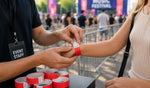
At events, wristband colors serve a purely operational purpose. The color itself does not carry a universal meaning. Instead, event organizers assign colors to represent access levels, ticket tiers, age groups, or days. The system works because staff can verify a guest's status with a quick glance rather than checking a list.
Common Event Color-Coding Systems
Most event organizers use a simple two-to-five-color system. Each color maps to a specific access level, and all staff members memorize the assignments before gates open. A typical festival setup might look like this:
| Color | Access Level |
|---|---|
| Green | General admission |
| Red | VIP |
| Yellow | Backstage or all-access |
| Blue | Staff and vendors |
| Orange | Volunteers |
The specific colors do not matter as long as they are visually distinct from each other. Organizers should avoid using colors that look similar under stage lighting or low light, such as dark blue and black, because misidentification slows down security checks.
Age Verification and Drink Service
Bars, nightclubs, and events that serve alcohol frequently use Tyvek wristbands to mark guests who have been age-verified. A guest with a specific color band can order drinks without showing ID at every transaction, which speeds up service and reduces line wait times. A different color, or no band at all, signals to bartenders that the guest has not been verified.
Multi-Day Event Color Rotation
Festivals and resorts that span multiple days assign a new color for each day. A guest wearing yesterday's color is immediately visible as someone who has not checked in for the current day. Plastic wristbands and vinyl wristbands handle multi-day wear with waterproof, snap-closure designs that survive continuous use.
- Assign one color per day to prevent reuse of expired bands.
- Use numbered bands alongside colors for capacity tracking.
- Choose colors that contrast sharply so staff can distinguish them quickly.
Tips for Getting Color Choices Right
Whether the wristband is for a cause or an event, a few practical guidelines help avoid problems. For awareness campaigns, sticking with the recognized color builds instant credibility. For events, prioritizing visual contrast over aesthetics keeps the system functional under real conditions.
Avoiding Common Color-Coding Mistakes
Choosing colors that look too similar, such as dark blue and black or red and orange, is the most frequent mistake event organizers make. Under stage lighting, in dim hallways, or in outdoor shade, subtle color differences disappear, and staff start second-guessing what they see. Picking colors from opposite ends of the spectrum, such as red and green or yellow and blue, keeps distinctions obvious in any lighting condition.
Ordering custom wristbands with printed text alongside the color adds a second layer of identification. A red band that also reads "VIP" or a pink band that also reads "Walk For Hope 2026" removes any ambiguity about what the color represents. Practical tips for color selection:
- Choose colors with high visual contrast from each other, not just from the band surface.
- Test color visibility under the lighting conditions your event will actually use.
- Print the access level, cause name, or day on the band alongside the color.
- Limit the system to five or fewer colors to keep staff identification fast and accurate.
Pick Colors That Match Your Message
Whether you are raising awareness or managing event access, the right color turns a simple wristband into a clear, instant identifier. Wristband Express offers silicone wristbands in over 100 colors for awareness campaigns and Tyvek, plastic, and vinyl bands in dozens of bold shades for event color-coding, all with same-day shipping on stock orders before 3 PM CST. Browse colors and start designing, or call 800.434.9124 for help matching a color to your cause or event.
Frequently Asked Questions
1. What do different wristband colors mean?
Wristband colors represent specific awareness causes (pink for breast cancer, blue for anti-bullying) or event access levels (VIP, general admission, staff) depending on the context.
2. What is the meaning behind colored awareness wristbands?
Each color links to a health condition, social cause, or movement. Pink represents breast cancer, purple represents Alzheimer's and epilepsy, and yellow represents troop support and childhood cancer.
3. How do you choose the right color for an awareness wristband?
Match the nationally recognized awareness color for your cause. Add a printed message or campaign name if the color is shared by multiple causes.
4. What do wristband colors represent at events and for causes?
At events, colors sort guests by access level, age verification, or day. For causes, colors connect the wearer to a specific health or social awareness campaign.
5. Can one wristband color represent more than one cause?
Yes. Purple, for example, represents Alzheimer's, epilepsy, and pancreatic cancer. Printing the specific cause name on the band removes any confusion.
6. How many colors should an event use for wristband coding?
Most events use two to five visually distinct colors. More than five increases the chance of staff misidentifying a color, especially in low-light conditions.
Share