

Can Event Wristbands Be Transferred Between Guests? How Tamper-Evident Closures Actually Work
Guest lists only work if a wristband stays on the wrist it was issued to. The moment one band can be slipped off and handed to a friend at the gate, paid entry turns into free entry. The good news is that a wristband built with a tamper-evident closure cannot move from one guest to another without leaving obvious damage. Here is how those closures work, which materials resist sharing, and how to keep entry secure at your next event.
Why Sharing a Wristband Is Harder Than It Looks
The short answer is no, not without visible proof. A properly applied wristband with a one-time closure locks around the wrist and cannot be reopened by hand. Any attempt to pull it off tears the material, breaks the snap, or stretches the band out of shape, all of which staff can spot in seconds. Cheaper bands with loose or reusable closures are a different story, and that gap is where sharing usually happens.
Whether a band can be shared comes down to one thing: the closure. Material affects comfort and lifespan, but the closure decides if a guest can pass the entry to someone else. Two closure styles do most of the work at events, and each one fails in a way that is easy to notice.
What Makes a Wristband Non-Transferable
A non-transferable wristband is not about how strong the band feels. What matters is whether the closure can be opened and reused. A one-time closure seals once and self-destructs on removal, so a guest cannot quietly move it to another wrist. Across every material, the same three traits define a band that resists sharing.
- A single-use closure that locks shut and cannot be reopened by hand.
- A material that tears, stretches, or snaps when someone forces it off.
- A closure that leaves clear, visible evidence once it is broken.
Wristbands That Can Be Shared
Not every wristband is designed to stop transfers, and being honest about that saves you a headache at the gate. Some bands are built to be reusable, which is a strength for causes and teams but a weakness for admission. The most common example is the stretch-fit silicone band, which slips on and off freely by design. If you hand out silicone wristbands for entry, a guest can pull one off and pass it to a friend in seconds.
Adhesive Strips vs. Locking Snaps: The Two Closures That Stop Transfers
Two closure types handle almost all event access control: the adhesive strip and the locking snap. Both are one-time-use by design, which is the whole point. Each seals once and then damages the band on removal, so a shared wristband always shows the evidence.
Adhesive Closures
Adhesive closures are the workhorse of single-day admission. The band ships with a peel-and-press strip that bonds to the band itself, not just to skin. Once wrapped and pressed, pulling the band off tears the paper-like material rather than releasing cleanly.
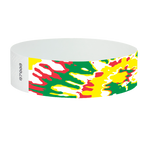
That seal is how Tyvek bands stay secure. Tyvek wristbands use a one-time-use adhesive closure that prevents transfer or reuse, and the tear-resistant, water-resistant material holds up through a full day of wear. Once the band comes off, it cannot go back on without an obvious rip. That single-use design is exactly why adhesive bands are the go-to for concerts, fairs, and daily admission, where cost per guest matters and the event wraps in a day.
One-Time-Use Locking Snaps
Locking snaps handle multi-day events where a band needs to survive longer wear. The snap plug pushes into a barrel and catches on an internal ridge, so it only travels in one direction. Reopening the closure by hand is not possible; the band has to be cut off.
Both plastic and vinyl bands rely on this design. Plastic wristbands use a one-time-use locking snap on a waterproof, non-stretch tri-laminate that resists tearing and fading. Vinyl wristbands use a secure snap on a heavier multi-layer band built for longer resort and festival stays. The fact that removal requires scissors is a feature, not a flaw. A guest who wants out has to destroy the band, which rules out quietly handing it to someone waiting outside the gate. Here is how the common closures compare:
- Adhesive (Tyvek): seals with a peel-and-press strip, tears the band on removal, and is built for single-day use.
- Locking snap (plastic and vinyl): clicks shut one way, must be cut to remove, and is built for multi-day wear.
- Stretch-fit (silicone): slips on and off freely, is fully reusable, and is not made for access control.
Are Event Wristbands Tamper Proof?
Precise language matters here, so it is worth being clear. The accurate term is tamper-evident, not tamper-proof. No consumer wristband is impossible to defeat given enough time and effort. What a quality band guarantees is evidence: any attempt to remove, reseal, or share it shows plainly.
Tamper-Evident vs. Tamper-Proof
The two terms sound similar but promise different things, and event planners benefit from knowing the difference. Tamper-proof would mean a band that can never be removed or copied, a bar that almost no real product meets. Tamper-evident means any interference is visible, which is what actually protects your gate. Think of it like the seal on a medicine bottle. The seal will not stop a determined person from opening it, but a broken seal tells you instantly that someone did. For access control, that evidence beats the promise of absolute security, because trained staff catch a torn strip or a cut snap in a moment.
- A shared band shows a torn strip, a cut snap, or a stretched-out fit.
- Gate staff can reject a damaged or resealed band on sight.
- Numbered or color-coded bands add a second check that is hard to fake.
How to Prevent Wristband Sharing at Events
Stopping transfers is part product choice and part process. The band gives you a closure that resists sharing, and your gate procedure closes the remaining gaps. A few simple habits handle most of the risk without slowing down entry.
Match the Closure to Event Length
The right closure depends on how long your event runs. A single-day concert or fair is well served by an adhesive band, which seals once and tears on removal. A weekend festival or resort stay calls for a locking-snap band that survives water, sweat, and repeated wear without loosening.
Add Visual and Numbered Verification
Closures stop the physical transfer, and a second visual layer catches anything staff might miss. Duplicate-numbered bands tie each guest to a record, and color coding by day or access level makes mismatches obvious. For branded control, pre-printed or custom event wristbands let you add text, logos, or VIP markings that are difficult to counterfeit. Woven cloth wristbands with a one-way slide bead add the same locking security for premium multi-day passes. Practical steps that cut down on sharing:
- Apply bands snugly at the entry so there is no slack to slip a hand through.
- Use one color per day or per access level so mismatches stand out.
- Choose numbered bands to tie each guest to a specific record.
- Train gate staff to check the closure, not just the color.
Keep Your Guest List Locked Down
Sharing stops at the closure. Pick the band that matches how long your event runs, apply it snugly, and give staff a fast way to spot a damaged seal. Wristband Express makes that easy with one-time adhesive Tyvek bands for single-day entry and one-time locking-snap plastic and vinyl bands for multi-day access, all shipped same-day on stock orders placed before 3 PM CST. Design yours today, or call 800.434.9124 to match a closure to your event.
Frequently Asked Questions
1. Can event wristbands be transferred between guests?
No. A wristband with a one-time adhesive or locking-snap closure tears or breaks on removal, so it cannot be passed on undamaged.
2. Are event wristbands tamper-proof?
Quality event bands are tamper-evident, not tamper-proof. Any attempt to remove or share one leaves visible damage that staff can catch.
3. How do tamper-evident wristband closures work?
Adhesive closures bond once and tear the band if peeled, while locking snaps click shut one way and must be cut to remove.
4. How can I prevent wristband sharing at events?
Apply bands snugly, match the closure to your event length, use numbered or color-coded bands, and train staff to check closures.
5. Can silicone wristbands be used for access control?
Silicone stretches on and off and is reusable, so it is easy to share. Adhesive or locking-snap bands suit admission far better.
6. Can a tamper-evident wristband be resealed after removal?
No. Once an adhesive strip tears or a locking snap is cut, the band cannot be reattached without obvious signs of tampering.
Share