

How Tour Groups Use Wristbands to Keep Travelers Organized
Managing a tour group through a busy airport terminal, a crowded city square, or an unfamiliar theme park is an exercise in controlled chaos. Guides need to account for every member at every stop, communicate changes on the fly, and quickly identify who belongs to the group and who does not. The larger the group, the harder all of that becomes.
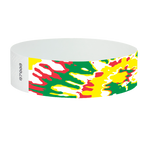
Wristbands for group travel have become one of the simplest and most effective tools for keeping tour groups organized from departure to return. A colored band on each traveler's wrist turns a disorganized crowd into a visually identifiable unit, making headcounts faster, venue access smoother, and lost-member situations far less stressful. Here is a practical look at how tour operators, school trip coordinators, and travel companies put wristbands to work.
Why Tour Groups Rely on Wristbands for Organization
Tour group logistics are different from standard event management. Groups move through multiple locations in a single day, often across unfamiliar cities or venues where members can easily get separated. Traditional travel group identification methods like matching T-shirts, printed name badges, and lanyards all have limitations that wristbands avoid.
The Challenge of Managing Groups in Crowded Spaces
A tour guide leading 40 people through a European city center or a school chaperone supervising 30 students at a museum faces the same problem: people wander. Stopping at restrooms, gift shops, and photo spots scatter the group quickly, and reassembling everyone at the meeting point takes time. In a crowd of hundreds or thousands, identifying who belongs to your group and who is a stranger becomes a visual puzzle, especially when everyone is dressed in similar travel clothing.
Why Wristbands Outperform Other Identification Methods
Matching T-shirts only work if everyone wears them, and compliance drops fast in warm weather or on multi-day trips. Lanyards and clip-on badges swing around, get tucked under jackets, and are easy to lose. Stickers peel off within hours. A wristband stays on the wrist all day, visible in any weather, and requires zero effort from the traveler after the initial application. For managing tour groups with wristbands, the visibility and permanence of the band are the two features that matter most.
6 Ways Tour Groups Use Wristbands to Keep Travelers Organized
The practical value of wristbands for tour groups extends well beyond basic identification. A well-planned wristband system handles group tracking, subgroup sorting, venue coordination, and safety all at once. Here are six specific ways tour operators put them to use.
1. Identifying Group Members at Crowded Tourist Sites
The most fundamental use of a tour group wristband is to make members visible in a crowd. A guide leading a group through a busy market, a theme park, or an airport terminal can scan for wristband color rather than memorizing faces. Bright or neon Tyvek® wristbands are especially effective because the colors are visible from 15 to 20 feet away, which gives guides a fast way to spot stragglers or confirm that the full group is present at a meeting point.
2. Color-Coding Subgroups by Bus, Activity, or Language
Larger tours often split into subgroups based on bus assignment, activity preference, or language. Color-coding each subgroup with a different wristband color eliminates confusion when groups reconvene at shared venues or meal stops.
A typical color-coding setup for a multi-bus tour might include:
- Red for Bus A and blue for Bus B, so travelers board the correct bus at every stop
- Green for the walking tour subgroup and orange for the museum-visit subgroup at a split-activity destination
- Yellow for English-speaking travelers and purple for Spanish-speaking travelers on bilingual tours
Guides and drivers can direct travelers to the right location with a simple "red bands this way, blue bands to the right" instead of calling names or checking paper lists.
3. Simplifying Headcounts at Every Stop
Headcounts are one of the most time-consuming parts of tour group management. A guide counting 40 travelers by face at a busy departure point can easily miscount when people shift positions, step behind pillars, or blend into the surrounding crowd. Wristbands turn headcounts into a color-scan exercise. The guide counts wristbands of the group's color rather than individual faces, which is faster, more accurate, and easier to repeat at every stop throughout the day.
For multi-day tours, issuing new wristband colors each day or at each major destination provides a built-in checkpoint system. If a traveler's wristband color does not match the current day's assignment, the guide knows immediately that something is off.
4. Distinguishing Paid Participants at Partner Venues
Many tour operators have pre-paid admission agreements with museums, parks, restaurants, and attractions. Wristbands give venue staff a fast way to verify which guests are part of the tour and entitled to pre-paid entry. A guide distributes custom-printed wristbands before the group enters the venue, and the venue's front desk or gate staff admits anyone wearing the band without processing individual tickets. For popular tourist sites that manage multiple tour groups per day, each operator's unique wristband color or printed logo prevents confusion between groups.
5. Keeping Students and Children Visible on School Trips
School field trips and youth group tours require an extra level of accountability. Chaperones need to identify their students at a glance in places like amusement parks, zoos, and science centers where children naturally scatter. Color-coded event wristbands assigned by class, grade, or chaperone group give adults a quick way to spot their assigned students without relying on name recall alone.
For younger children, printing the school name, a contact phone number, or the bus number on the wristband provides a safety net if a child gets separated. A lost child wearing a printed wristband can be identified and reconnected with the group far more quickly than one carrying a lanyard or nothing at all.
6. Printing Emergency Contact and Medical Details on the Band
International tours and adventure travel groups often operate in locations where language barriers and unfamiliar medical systems add risk. Printing an emergency phone number, a tour operator's name, or a hotel address on the wristband gives every traveler a piece of critical information that cannot be lost, forgotten in a hotel room, or buried in a dead phone. Some tour operators also use inside-band printing on silicone wristbands to include medical alert notes or allergy information that is visible to first responders but not to the general public.
Tour Group Organization Tips for Getting the Most Out of Wristbands
A wristband only works as an organizational tool if the material matches the trip and the distribution process is well planned. A few practical decisions before departure make the system run smoothly from day one.
Choosing the Right Material and Setup for the Trip
Not every tour requires the same wristband type. Match the material to the trip's duration, environment, and organizational needs:
- Single-day tours (city walks, museum visits, day excursions): Tyvek wristbands are the most cost-effective option. Lightweight, water-resistant, and available in neon colors for high visibility.
- Multi-day tours (cruise excursions, resort stays, week-long itineraries): Plastic wristbands with snap closures last 3 to 7 days and survive water, sweat, and daily wear without loosening.
- Keepsake tours (milestone trips, reunion travel, destination celebrations): Silicone wristbands with a custom debossed tour name and date give every traveler a lasting memento of the experience.
Distribute wristbands at the first group gathering, whether that is the airport gate, the hotel lobby, or the bus. Applying bands early means the identification system is in place before the group enters its first crowded venue.
Keep Your Tour Group Together From First Stop to Last
A well-organized wristband system means faster headcounts, smoother venue access, and fewer stressful moments when the group splits across a busy destination. Wristband Express offers custom wristbands in Tyvek, plastic, silicone, and vinyl with color-coding, custom printing, and sequential numbering options built for group travel logistics. Stock orders placed before 3 PM CST ship the same day. Start designing at wristbandexpress.com.
Frequently Asked Questions
1. What type of wristband is best for a single-day tour?
Tyvek wristbands are the most practical choice for day tours. Lightweight, affordable, and available in bright neon colors, Tyvek bands are easy to apply and visible enough for guides to spot in a crowd.
2. Can wristbands be customized with a tour company logo?
Yes. Custom Tyvek and silicone wristbands can be printed with logos, tour names, phone numbers, and graphics. Custom Tyvek orders require just one business day of production.
3. How do tour guides use wristbands for headcounts?
Guides count wristbands of the group's color rather than individual faces, which is faster and more accurate in crowded locations. Color-coded subgroups make partial headcounts for bus assignments or activity splits equally efficient.
4. Are wristbands safe for children on school trips?
Yes. Printing a school name, contact number, or bus number on the wristband provides a safety net if a child gets separated. Wristbands stay on the wrist all day, unlike lanyards or stickers that can be lost.
5. How many wristband colors should a tour operator stock?
Keep at least two to three colors on hand for subgroup assignments. Multi-day tours benefit from one color per day to provide a built-in checkpoint system and prevent confusion across itinerary changes.
6. Can I print emergency contact information on a wristband?
Yes. Emergency phone numbers, hotel addresses, and tour operator names can be printed on the wristband exterior. Inside-band printing on silicone wristbands allows for private medical or allergy information.
Share