





Tyvek® vs. Plastic vs. Vinyl vs. Silicone: The Complete Wristband Material Decision Guide
Every wristband material handles a different job. Tyvek® tears when tampered with, making it ideal for one-night concerts. Vinyl survives a week at a water park without loosening. Silicone lasts indefinitely on someone's wrist as a walking reminder of a cause they support. Picking the wrong material for your event length and security needs wastes budget and creates problems at the gate.
Rather than comparing two materials at a time, this guide covers all four side by side so you can match your event to the right wristband in one read.
Start With Your Event Length
Event duration is the single most reliable starting point for choosing a wristband material, because each option has a clear wear-life range that determines whether the band will hold up from open to close. A quick-reference breakdown by duration:
- Tyvek: 1 to 2 days (concerts, bar crawls, single-day festivals)
- Plastic: 3 to 7 days (weekend festivals, short resort stays, corporate retreats)
- Vinyl: 7 to 10 days (water parks, extended resort access, multi-week programs)
- Silicone: Indefinite (awareness campaigns, memberships, brand promotions)
Once you know where your event falls on that timeline, the material decision narrows to one or two options. From there, budget, security features, and customization needs determine the final pick.
Single-Day Events
Concerts, fundraiser galas, bar crawls, school carnivals, and age-verified tastings rarely last more than 12 hours. For these events, a lightweight, disposable wristband that goes on fast and cannot be transferred is the priority. Cost per unit matters most here because volumes tend to be high and the band gets discarded the same night.
Multi-Day Events (Three to Seven Days)
Music festivals, resort stays, corporate retreats, and multi-day conferences need a wristband that survives showers, sleep, and sun exposure without degrading. Snap or locking closures replace adhesive strips, and the material needs to resist stretching, tearing, and casual removal for the full event window.
Extended Wear and Permanent Use
Season passes, gym memberships, cause-awareness campaigns, and ongoing access programs require wristbands built for weeks, months, or indefinite daily wear. Comfort, skin safety, and brand visibility over time take priority over disposability and per-unit cost.
Tyvek: Best for Single-Day Entry and Age Verification
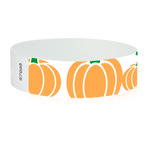
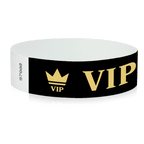
Tyvek wristbands are made from a high-density polyethylene fiber developed by DuPont. The material is lightweight, tear-resistant, and water-resistant enough to survive a full day of outdoor use. Adhesive closures make application fast, and the band cannot be removed and reapplied without visibly damaging it, which deters transfer between attendees.
Tyvek is the lowest-cost wristband material on the market, typically starting at a few cents per unit in bulk. Wide color availability and full-color printing support make Tyvek the default choice for general admission, age verification (21+ at bars, for example), and any single-day event where high volume and fast application matter more than multi-day durability. The material is rated for one to two days of continuous wear.
Plastic: Best for Short Multi-Day Admission Control
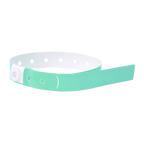
Plastic wristbands use a smooth, flexible material with a one-piece snap closure that locks permanently once applied. The snap mechanism prevents removal without cutting, making plastic bands more secure than adhesive-closure Tyvek for events lasting multiple days.
Plastic wristbands are rated for three to seven days of continuous wear, which covers the typical festival weekend, a five-day resort stay, or a week-long corporate event with rotating attendee groups. The smooth surface supports printed text, barcodes, and sequential numbering, making plastic bands a strong fit for events that need to track individual attendees or verify age-restricted access across multiple days. Per-unit cost sits between Tyvek and vinyl, making plastic a practical mid-range option when disposability is still acceptable but the event extends beyond a single day.
Vinyl: Best for Multi-Week Access and Cashless Tabs
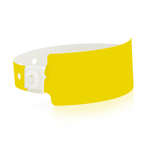
Vinyl wristbands are the most durable disposable option, built for seven to ten days of continuous wear in demanding environments. A secure snap or locking closure, combined with a wider band profile, makes vinyl resistant to stretching and casual removal.
Vinyl is the standard material for water parks, all-inclusive resorts, and multi-week festival circuits where the wristband doubles as a cashless payment trigger or meal-plan identifier. The heavier construction also makes vinyl bands the most comfortable of the disposable options for extended wear, reducing the skin irritation that lighter materials can cause after several days. Vinyl sits at a higher price point than Tyvek or plastic, but the extended wear life and enhanced security features justify the cost for events that run beyond a standard weekend and require reliable identification throughout. Many all-inclusive properties also prefer vinyl because the wider band accommodates printed guest information, room numbers, or meal-plan codes without sacrificing readability.
Silicone: Best for Reusable, Everyday, or Cause-Driven Wear
Silicone wristbands are not disposable event bands. Silicone is a flexible, hypoallergenic rubber that lasts indefinitely with daily wear, resists water, sweat, and UV exposure, and can be customized using several methods:
- Debossed: Text pressed into the surface, creating recessed lettering
- Embossed: Text raised above the surface for a tactile effect
- Ink-filled: Color added to debossed recesses for higher contrast
- Screen-printed: Full-color designs applied directly to the surface
Awareness campaigns, nonprofit fundraisers, brand promotions, and membership programs use silicone because the wristband becomes a keepsake rather than a gate-control tool. A supporter wearing a pink breast cancer bracelet six months after a fundraiser walk is still generating visibility for the cause. Silicone costs more per unit than any disposable material, but the extended lifespan and ongoing brand exposure shift the value equation for campaigns built around long-term engagement rather than single-event access control.
Side-by-Side Comparison Table
The table below consolidates the key decision factors across all four materials. Matching your event duration to the corresponding row eliminates the most common ordering mistake: paying for durability you do not need, or buying a band that fails before the event ends.
| Feature | Glow Silicone | Standard Silicone |
|---|---|---|
| Visible in low light | Yes | No |
| Waterproof | Yes | Yes |
| Price from | $0.12/ea | $0.12/ea |
| Minimum | 25/color | 25/color |
| Best for | Night events, concerts, haunted houses | Daytime events, fundraisers |
Shop All Wristband Materials
Matching your event length to the right material eliminates guesswork and prevents the two most common ordering mistakes: buying a wristband that falls apart before the event ends, or spending more than the situation requires. Wristband Express carries custom wristbands in all four materials with same-day shipping on stock orders placed before 3 PM CST. Browse the full catalog or call 888.256.0816 to talk through your event requirements with the team.
Frequently Asked Questions
How Do I Choose Between Tyvek, Plastic, Vinyl, and Silicone Wristbands?
Start with your event length. Tyvek handles one to two days, plastic covers three to seven days, vinyl lasts seven to ten days, and silicone is built for indefinite wear. Match the material's rated duration to your event, then factor in budget and security needs.
What Is the Best Wristband Material for My Event Length?
Single-day events work best with Tyvek due to low cost and fast application. Multi-day festivals and short resort stays suit plastic. Vinyl handles week-long programs, and silicone fits ongoing memberships or awareness campaigns.
Are Tyvek Wristbands Waterproof?
Tyvek is water-resistant enough to survive rain, hand washing, and light splashing, but prolonged submersion can weaken the adhesive closure. For water parks or pool events lasting multiple days, vinyl is the better choice.
Can Plastic Wristbands Be Removed and Reused?
No. Plastic wristbands use a one-piece snap closure that locks permanently. The band must be cut to remove, which prevents unauthorized transfer between attendees.
What Makes Vinyl Wristbands More Expensive Than Tyvek?
Vinyl uses a heavier, wider-profile material with a secure locking closure rated for seven to ten days of wear. The added material, durability, and closure mechanism account for the higher per-unit cost compared to lightweight Tyvek.
Are Silicone Wristbands Good for Fundraising Events?
Yes. Silicone bracelets are the standard for cause-awareness fundraisers because supporters wear them long after the event, generating ongoing visibility. The higher per-unit cost is offset by extended brand exposure and keepsake value.
Share