

How Waterparks Use Wristbands for Daily Admission and Guest Tracking
A busy waterpark can cycle through thousands of guests in a single day. Families arrive in waves, kids scatter toward different attractions, and staff need to know at a glance who paid for general admission, who has a VIP pass, and who belongs to which group. Paper tickets get soaked. Lanyards get caught on slides. Wristbands solve all of these problems at once.
Waterpark admission wristbands have become the standard identification tool across the industry because they are waterproof, non-transferable, visible from a distance, and comfortable enough to wear from the wave pool to the lazy river without a second thought. Below is a practical look at how waterparks use wristbands across every stage of the guest experience, from the ticket booth to the exit gate.
6 Ways Waterparks Use Wristbands for Admission and Guest Tracking
Waterpark wristband systems do far more than mark who paid at the gate. A well-designed wristband program handles admission verification, capacity tracking, zone access, re-entry management, and equipment rentals, all through a single band on the guest's wrist. Here are the six most common operational uses.
1. Controlling Daily Admission at the Gate
The most basic function of a waterpark wristband is to confirm that a guest has paid for admission. Staff issues a wristband at the ticket booth or check-in counter, and the band replaces the traditional paper ticket for the rest of the day. Because waterpark access wristbands are worn on the body, guests cannot lose them in a locker, drop them in the water, or accidentally throw them away with their lunch tray. Gate staff verifies admission with a quick visual check rather than asking every guest to produce a ticket.
For high-volume parks processing hundreds of guests per hour, wristbands speed up entry significantly. A single color or pattern assigned to each day's admission makes verification instant; no scanning is required for basic operations.
2. Color-Coding Access Tiers and Guest Types
Color-coding is one of the simplest and most effective waterpark guest tracking wristband strategies in use today. Parks assigns a different wristband color to each guest category, allowing staff to identify access levels from several feet away without stopping the guest.
Common color-coding setups include:
- One color for general admission and a second for VIP or premium access
- Separate colors for adults, children, and seniors to enforce age-restricted attractions
- A distinct color for season pass holders to differentiate them from single-day visitors
- Staff and vendor bands in a color not available to guests, preventing unauthorized access to back-of-house areas
Changing the daily admission color prevents yesterday's wristband from being reused, which is a simple but effective anti-fraud measure for parks that operate on consecutive days.
3. Tracking Guest Capacity Throughout the Day
Waterparks operate under maximum occupancy limits set by local safety codes. Wristbands give operations teams a straightforward way to track how many guests are inside the park at any given time. Every wristband issued at the gate represents one guest counted in, and every wristband returned or cut at the exit represents one counted out. Sequential numbering on custom Tyvek® wristbands makes this tracking even more precise, allowing managers to cross-reference total bands issued against total admissions sold.
When the park approaches capacity, the ticket booth can pause new wristband distribution until guests begin to leave. Real-time capacity awareness also helps parks anticipate staffing needs at food stations, lifeguard posts, and ride queues during peak hours.
4. Managing Re-Entry Without Slowing Down Lines
Many waterpark guests leave during the day to grab lunch off-site, return to a hotel room, or take a break from the sun. Without a wristband, re-entry becomes a logistical headache requiring receipts, hand stamps, or repeated conversations with gate staff.
Plastic wristbands and vinyl wristbands with snap closures solve re-entry cleanly. The tamper-proof closure stays locked on the wrist all day, so returning guests simply show their band and walk in. The snap closure also prevents guests from passing the band to someone outside the park, protecting revenue.
5. Securing Restricted Zones and VIP Areas
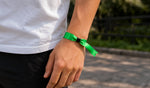
Larger waterparks often have areas that are off-limits to general admission guests, such as VIP cabanas, adults-only pools, premium slide complexes, or private party sections. Wristbands provide a visible, non-verbal way for staff to enforce zone restrictions. A guest wearing a green general admission band approaching a VIP area can be redirected quickly and politely.
Premium wristband tiers also create a clear upsell opportunity. Parks can offer VIP wristband upgrades at the gate or online, with the upgraded band granting access to exclusive zones, shorter ride lines, or complimentary equipment rentals. Vinyl wristbands with Cashtag tabs take this a step further by enabling cashless purchasing at food stands, gift shops, and rental counters, all tied to the guest's wristband.
6. Supporting Equipment Rentals and Add-On Services
Waterparks rent out lockers, towels, tubes, cabanas, and floatation devices throughout the day. Tracking which guest rented what can get complicated when thousands of people are moving between attractions. Wristbands with detachable voucher tabs or printed serial numbers simplify the process. A guest receives a Tyvek® wristband with a tear-off tab at the rental counter, and the tab serves as the receipt while the wristband stays on the wrist. At the return time, the staff matches the serial number to the rental log.
Some parks also use wristband stubs to manage meal deals, drink packages, or ride credits, giving guests a hands-free way to redeem prepaid add-ons without carrying a separate voucher.
Which Wristband Materials Work Best in a Waterpark
The waterpark environment is one of the most demanding settings for any event wristband. Chlorine, sunscreen, sweat, sand, and constant water exposure test every material. Choosing the right one depends on how long the band needs to last and what level of security the park requires.
Tyvek for High-Volume Single-Day Admission
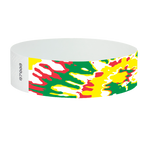
For parks that issue new wristbands each day, Tyvek wristbands offer the best balance of cost and functionality. Tyvek is water-resistant, tear-resistant, and available in a wide range of colors and patterns for daily color rotation. The adhesive closure is tamper-evident, and per-unit costs are the lowest of any wristband material, which matters when a park distributes thousands of bands per day.
Plastic and Vinyl for Multi-Day Passes and Season Access
Parks that sell multi-day passes, week-long resort packages, or season memberships need materials that survive more than 24 hours of water exposure. Plastic wristbands last 3 to 7 days with a waterproof, snap-lock closure. Vinyl wristbands extend that range to 7 to 10 days, with a softer, more comfortable construction that reduces skin irritation during extended wear. Both materials are fully waterproof and use non-transferable snap closures that must be cut to remove.
Tips for Building an Effective Waterpark Wristband System
A wristband program only works if the color and numbering plan is consistent and the staff know how to enforce the system. A few operational basics go a long way toward keeping things running smoothly.
Strategies That Simplify Daily Operations
Waterpark managers who get the most out of wristband systems tend to follow a few common practices:
- Rotate admission colors on a daily basis so yesterday's band cannot be reused for free entry
- Assign one color exclusively to staff and vendors, and never use that color for guests
- Print the date or a day-specific code on every admission band to add a second layer of verification
- Keep a backup stock of at least two extra colors on-site for unexpected demand or last-minute event tiering
- Train all front-line staff on the current day's color scheme before gates open
Equip Your Waterpark With Wristbands Built for the Water
Running a waterpark wristband program starts with the right materials. Wristband Express offers custom wristbands in Tyvek, plastic, and vinyl with waterproof construction, custom printing, serial numbering, and voucher tab options designed for high-volume daily operations. Stock orders placed before 3 PM CST ship the same day. Start designing at wristbandexpress.com.
Frequently Asked Questions
1. What type of wristband do most waterparks use for daily admission?
Tyvek wristbands are the most common choice for single-day waterpark admission because of their low per-unit cost, water resistance, and tamper-evident adhesive closure. Parks rotate colors daily to prevent reuse.
2. Are waterpark wristbands waterproof?
Tyvek wristbands are water-resistant and hold up for a full day of water exposure. Plastic and vinyl wristbands are fully waterproof and designed for multi-day use in pools, wave machines, and water slides.
3. How do waterparks prevent wristband sharing between guests?
Plastic and vinyl wristbands use one-time snap closures that lock onto the wrist and cannot be reopened without cutting. Tyvek wristbands use tamper-evident adhesive that shows visible damage if removal is attempted.
4. Can waterpark wristbands be customized with a park logo?
Yes. Custom printing options allow parks to add logos, park names, safety messaging, barcodes, QR codes, and serial numbers. Custom Tyvek wristbands require just one business day of production time.
5. How many colors should a waterpark stock for wristband rotation?
Most parks keep a minimum of seven colors on hand to rotate daily throughout the week. Stocking two to three additional backup colors provides flexibility for special events, group bookings, and VIP tiers.
6. What is the most durable wristband for a multi-day waterpark pass?
Vinyl wristbands offer the longest wear duration at 7 to 10 days and are the most comfortable option for extended waterpark use. Plastic wristbands are a cost-effective alternative for passes lasting 3 to 7 days.
Share